


Soil Fertility is Not Bought
It Is Built, Grown and Protected
Most soils already contain everything plants need. What’s missing is not fertiliser, but space, air, water, and biological life. When soil biology is given the right conditions, fertility builds itself—quickly, safely, and permanently. This page explains how Keyline cultivation and the Yeomans Plow accelerate a natural process that has always been the foundation of productive farming.
Create Fertile Soil Naturally — Without Relying on Fertiliser
Most farmers don’t have a fertiliser problem.
They have a soil structure problem.
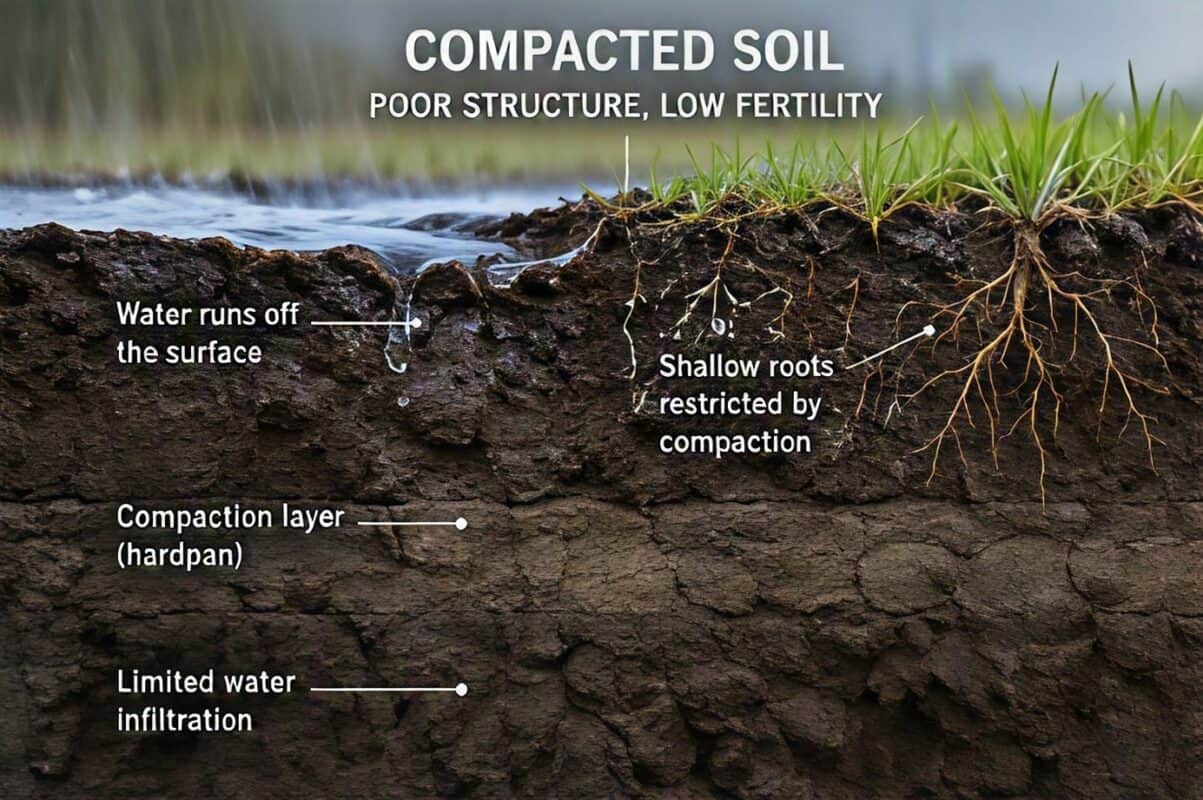
When soil becomes compacted, it shuts down the natural processes that create fertility. Water can’t get in. Air can’t circulate. Roots stay shallow. Biology slows or dies.
The result?
- Poor pasture performance
- Reduced yields
- Increasing dependence on fertiliser inputs
True fertility does not come from what you add to the soil.
It comes from how the soil functions.
Why Soil Stops Improving
Even with good rainfall and fertiliser, soils often fail to improve because:
|
|
Healthy soil depends on a simple but critical system:
|
|
When any of these are restricted, fertility stops developing.
The Natural Process of Creating Fertility
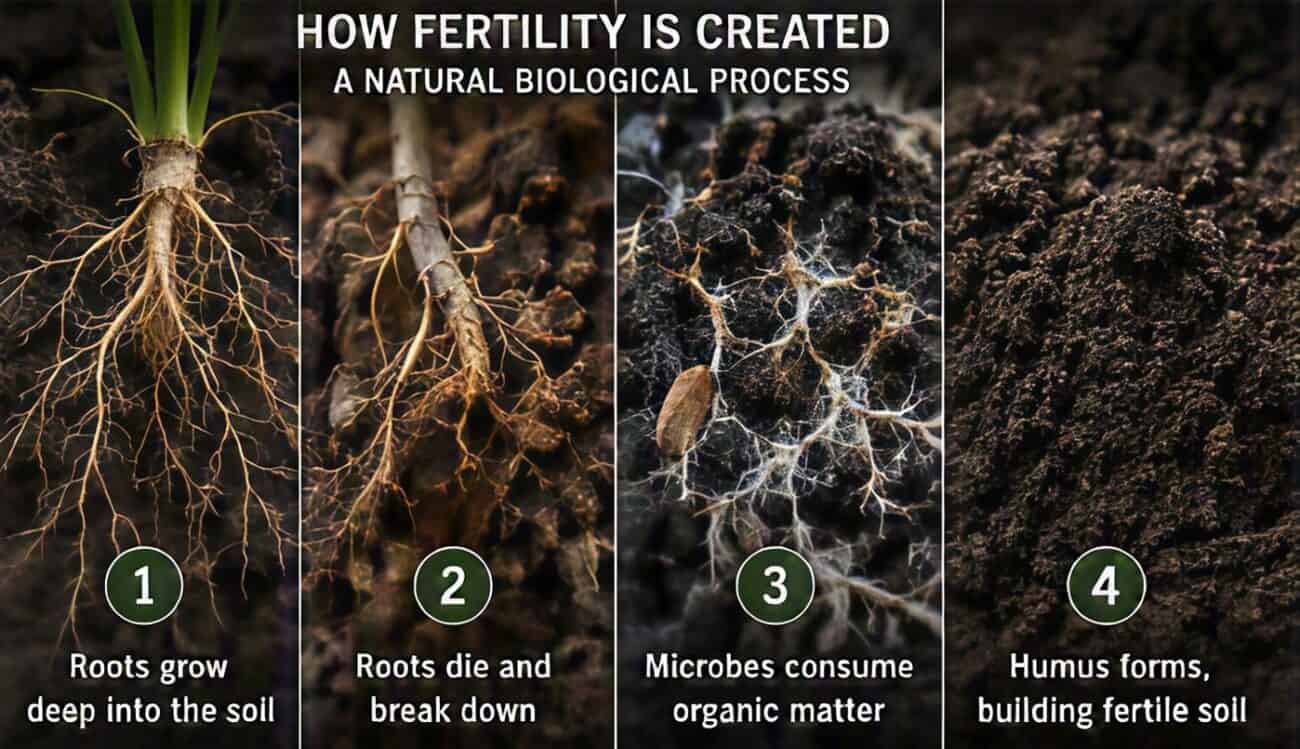
Fertility is created inside the soil through biological activity.
When conditions are right, soil organisms break down plant material and build humus-rich topsoil, unlocking nutrients and improving structure.
But this only happens when the soil environment allows it.
How Fertility Is Built
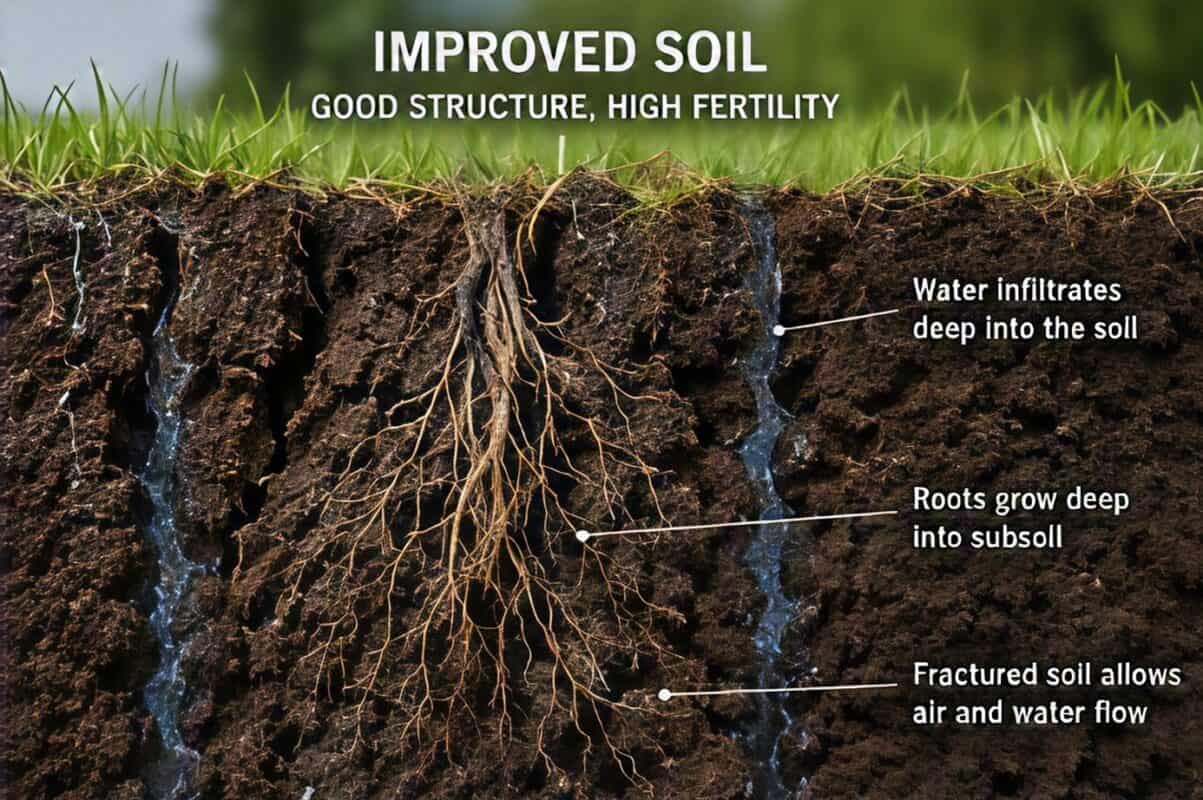
1. Break soil compaction
↓
2. Air and water move deep into the soil
↓
3. Roots grow deeper
↓
4. Dead roots feed microbes
↓
5. Humus forms
↓
6. Soil becomes naturally fertile
What’s Preventing This on Most Farms
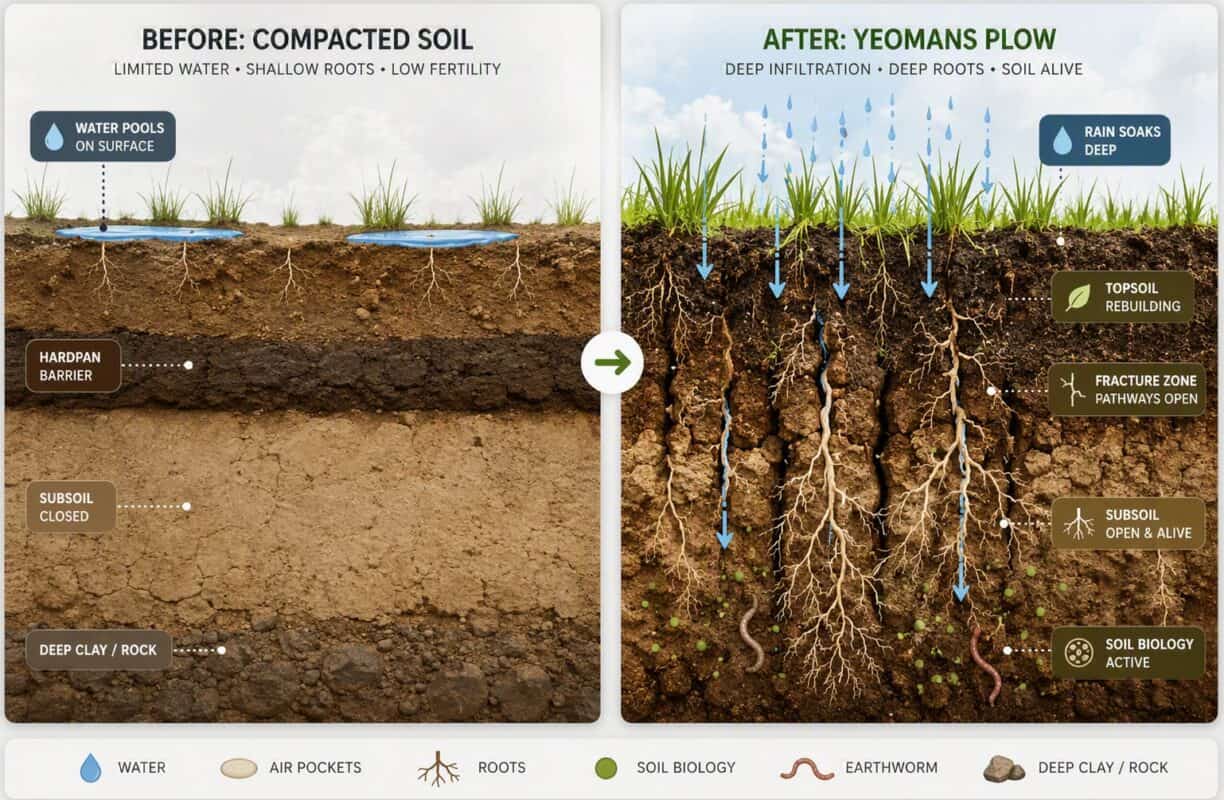
In most paddocks, compaction layers (hardpans) have formed over time due to machinery, livestock, and natural soil settling.
These Layers:
|
|
Without addressing compaction, fertility cannot develop properly.

The Keyline Solution: Unlocking Fertility in Your Soil
The Yeomans approach is to open the soil from below without destroying its structure
Using deep subsoiling techniques:
- Compacted layers are fractured
- Water is absorbed instead of running off
- Lets water soak deep
- Air reaches deep into the soil
- Roots grow into new zones
- Soil biology rapidly increases
This creates the ideal conditions for natural fertility to develop.
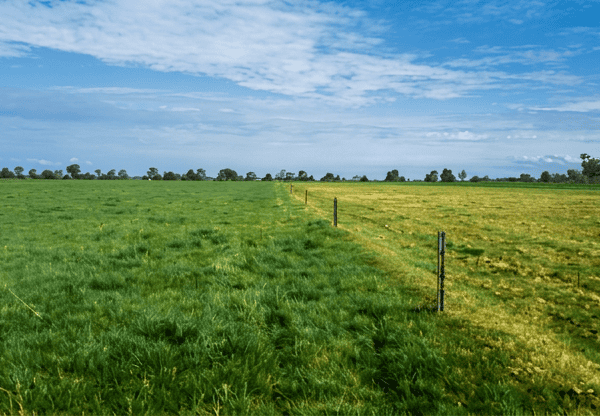
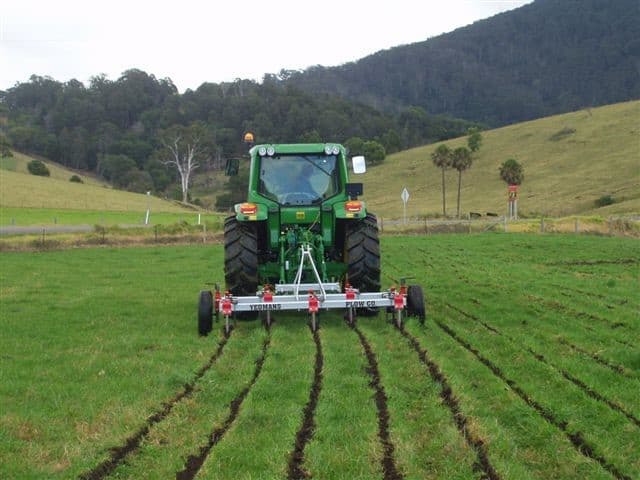
2 Paddocks
One has been deep tilled with a Yeomans Plow
The other hasn’t.
What Makes Yeomans Different
Unlike conventional cultivation:
|
|
This approach supports continuous soil improvement, not degradation.
What You’ll See in Your Soil
When fertility starts building properly, the changes are obvious:
- Rainfall soaks in instead of running off
- Pasture recovers faster and grows stronger
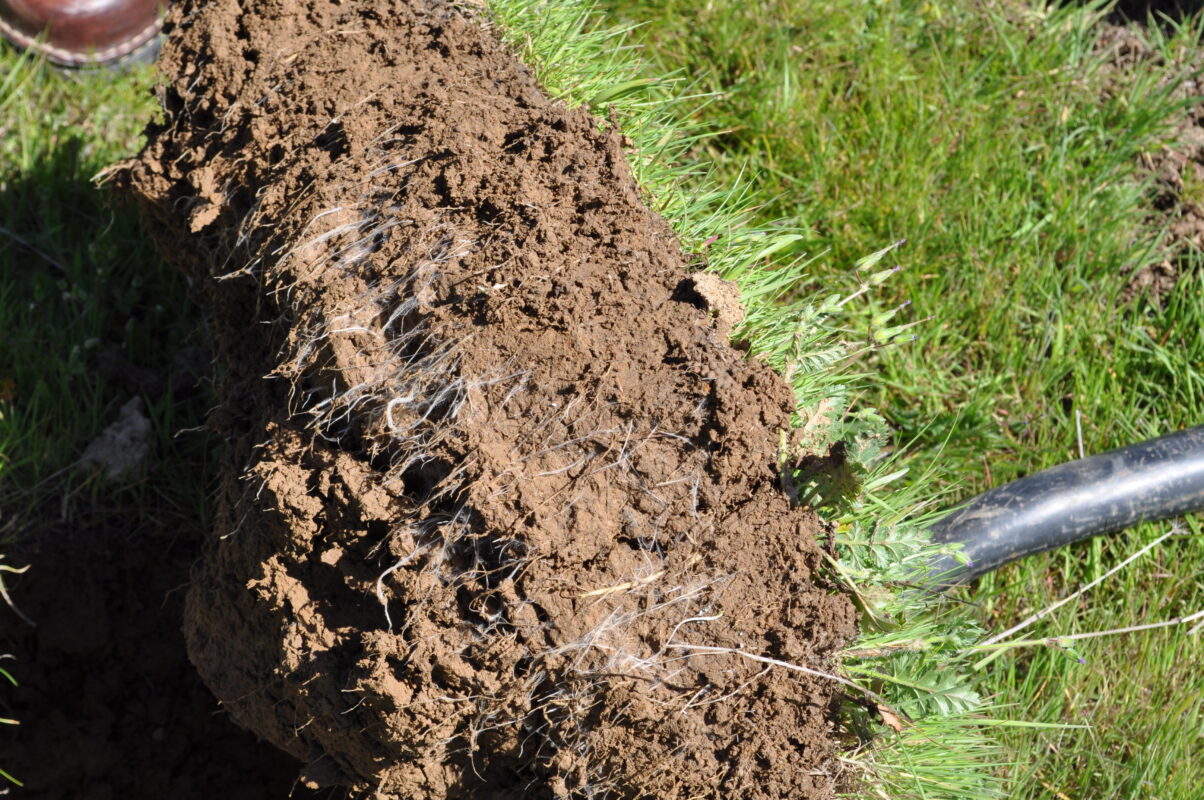
- Roots extend deeper into the soil
- Air reaches deep into the soil
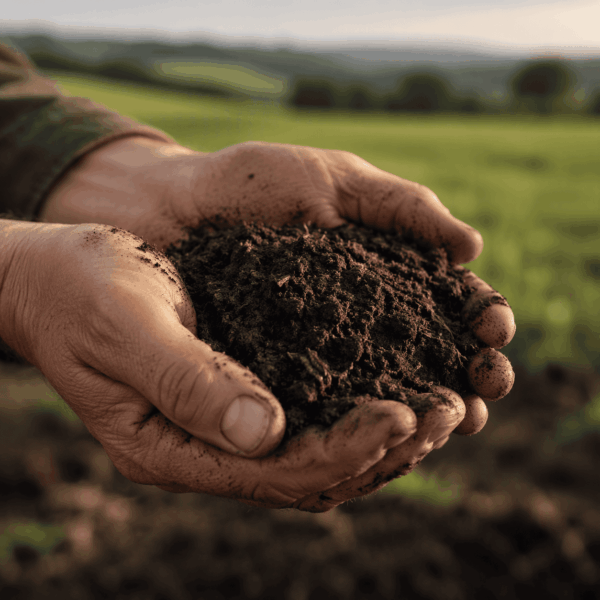
- Soil becomes darker and richer (increasing humus)
- Crops and pasture become more resilient
Improving soil structure allows plants to access more water, more nutrients, and more stability, leading to stronger and more productive growth.
A System That Builds Over Time
One of the most important advantages of this approach:
👉 It improves with each season, as roots grow deeper and organic matter increases:
|
This reduces reliance on external inputs and builds long-term farm productivity.
Fertility Is Not Added — It’s Created
Traditional systems rely heavily on fertilisers to replace what the soil cannot produce.
The Keyline approach builds a system where:
- Soil creates its own fertility
- Nutrients are naturally cycled and released
- Productivity increases from within the soil
This is a more economical, sustainable, and resilient way to farm.
Take the Next Step
If you want to improve soil performance, increase productivity, and reduce reliance on inputs:
👉 Find the right Yeomans plow for your property – Click Here
👉 Speak to us about your soil conditions – Contact Us
👉 Learn how to apply Keyline principles on your farm – Click Here
👉 Get a plow quote – Click Here